How it works
SaaS Factory keeps one clock — the days between your idea and your first paying customer. This page walks the journey that clock measures: the moments where a friction between you and revenue gets removed. Knowing what to build. Getting it built without a dev team. Everything a product needs before it can earn. One mission statement or specification in; a live company that can take money comes out — with the cost of every feature on the record.
Learning friction
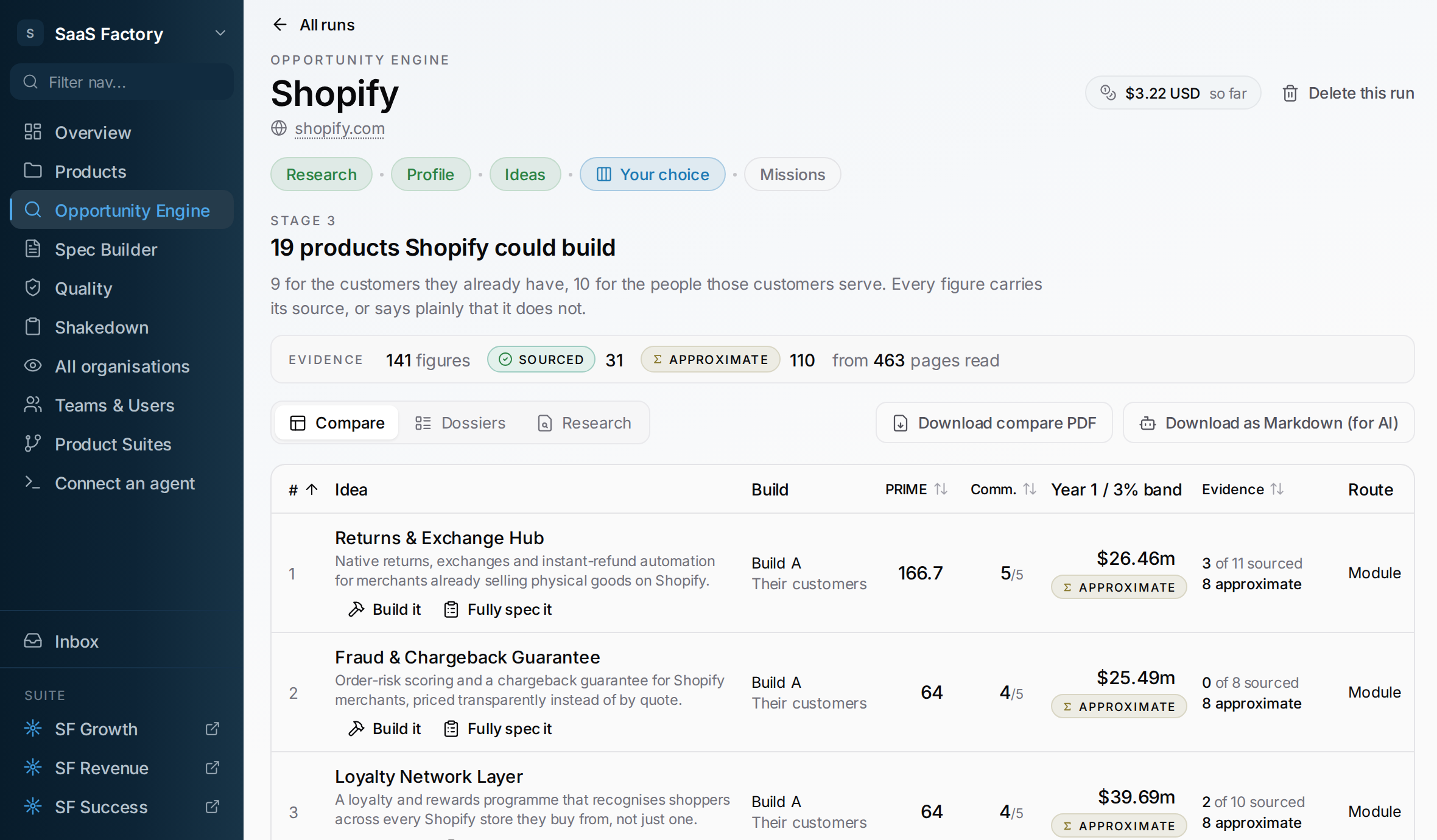
The first friction is knowing what to build. Paste a company's URL into the Opportunity Engine and it returns a market analysis with the product ideas attached — adjacent products, the ones your existing customers already use, and downstream products, the ones your customers' customers need. You arrive with a hunch; you leave with a shortlist.
WHAT IT COSTS
Every feature shows exactly what it cost to build, to the cent. Most cost a few dollars. Not developer’s day rate. No surprise invoices. It all comes from your account balance, so you’re always in control. See what a plan costs on Pricing....
Your part
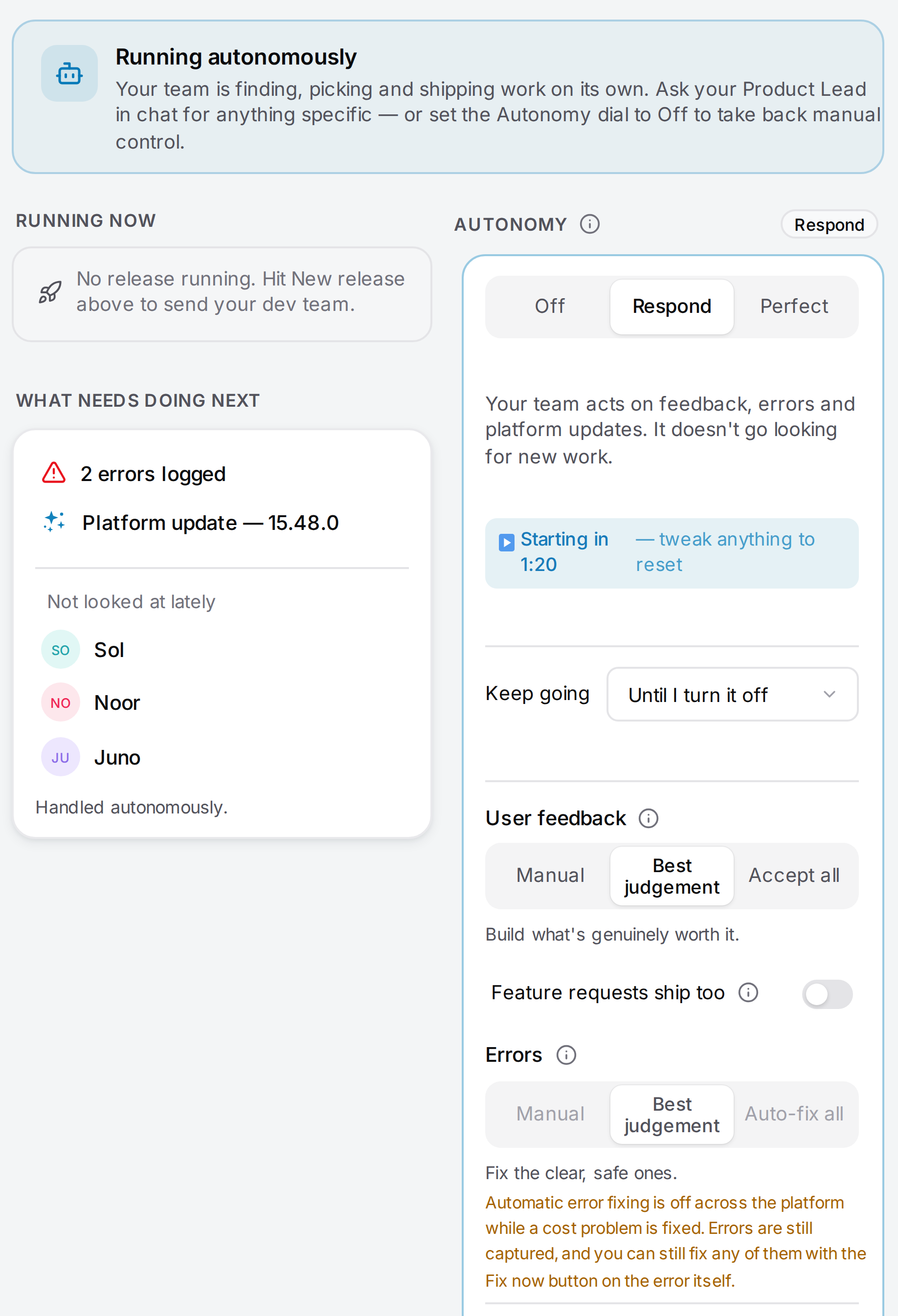
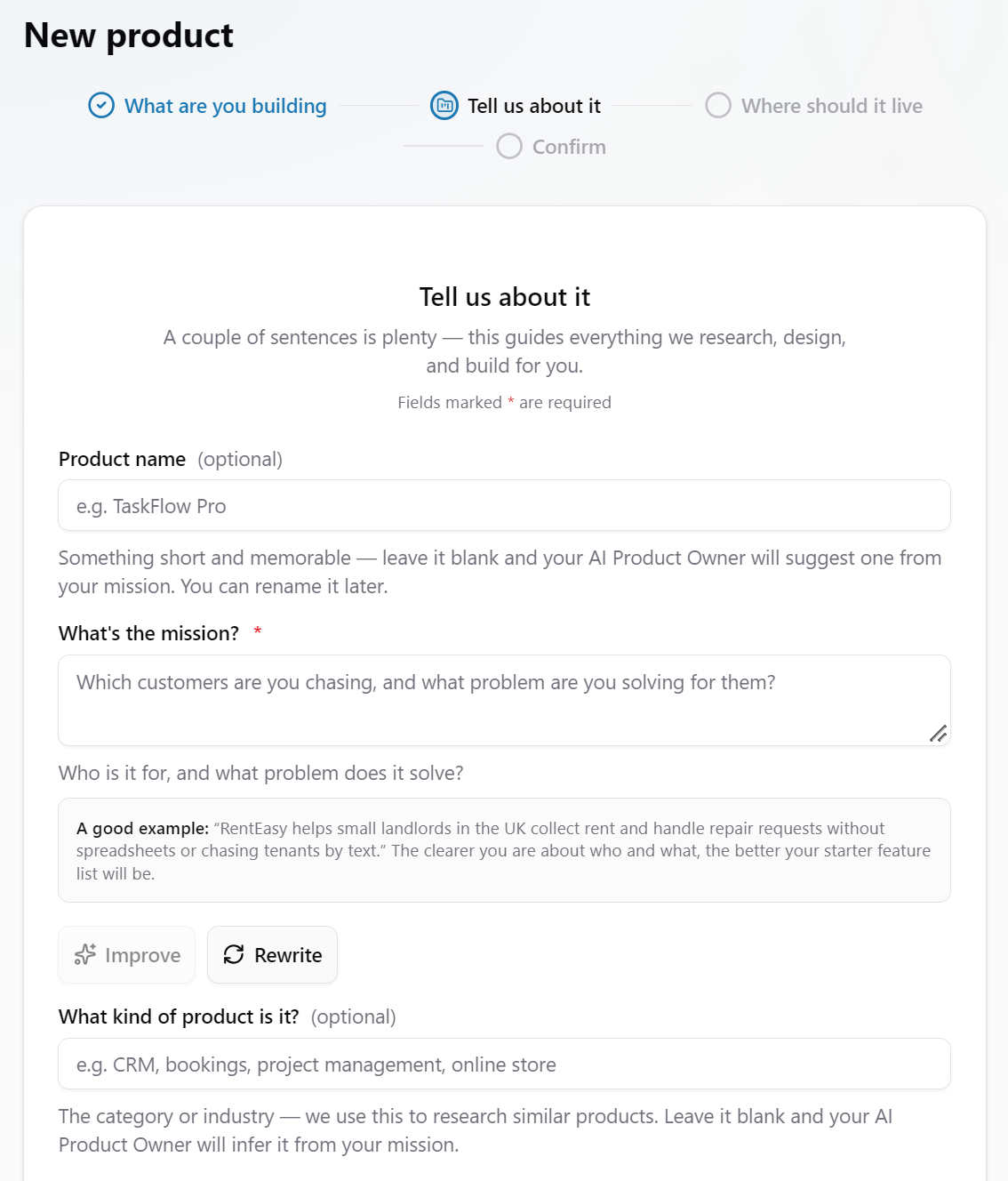
Pick the product and write one mission statement — what the company is for, in your words. The Product Owner agent answers with a feature set, a tech stack and a build plan, then starts building it out. From there your job is direction, not delivery: you choose what gets built and how much initiative the team takes. The dial has three settings, described here in the product's own words.
Feature Set Every feature your product needs, from one mission statement.
Tech Stack Auth, database, hosting, payments, the lot. Chosen, set up, auto managed and live.
Specification & Product Requirement Documents (PRD's) Takes a little longer up front. You get a full spec the AI builds to fast and right first time. No costly changes later. Ideal for Enterprise and complex builds.
Technical friction
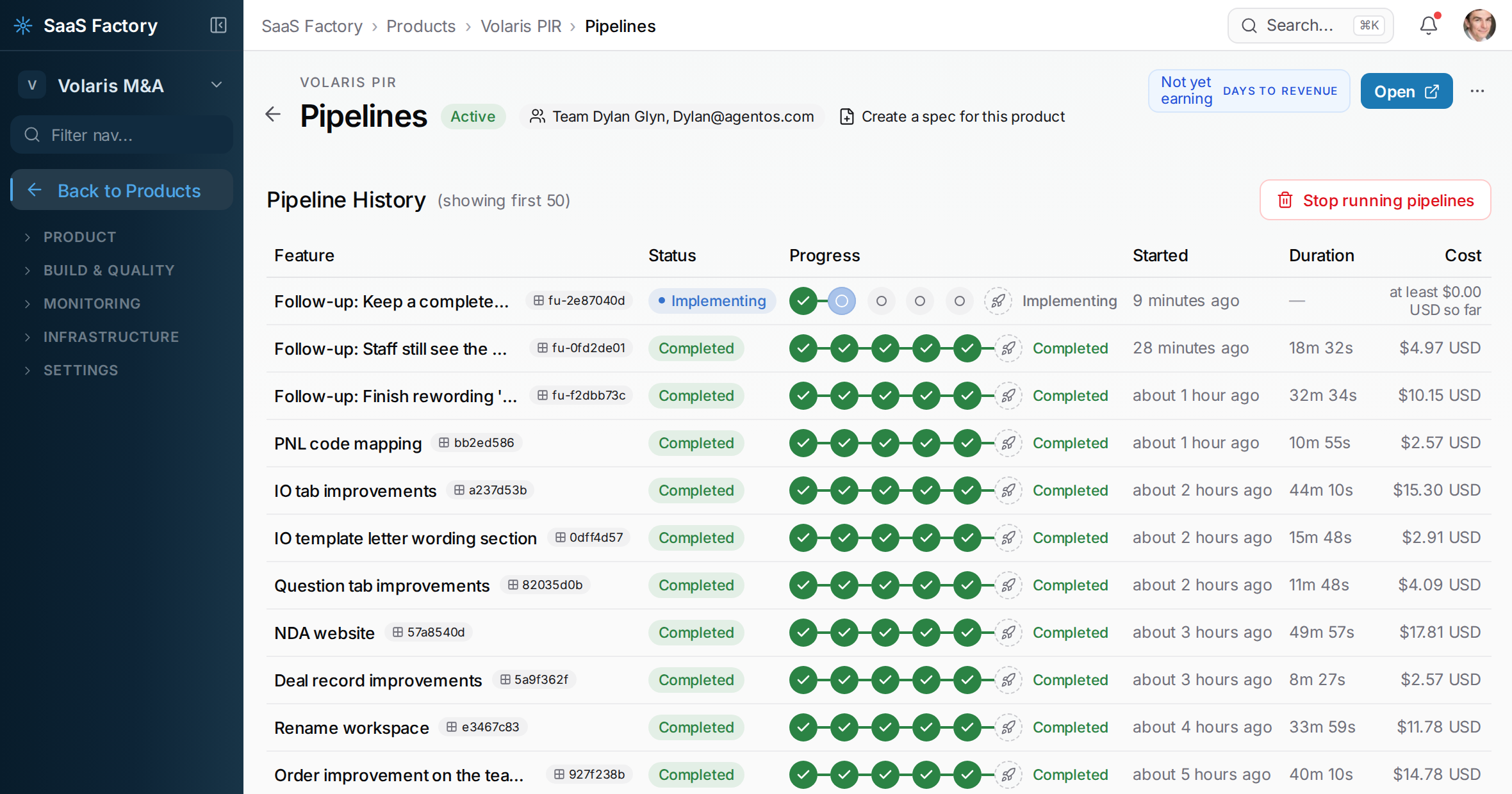
Friction causes revenue delay. SaaS Factory clears the way. Building is where most products stall. Hiring developers, choosing tools, managing releases. It takes months. Here, every request goes through the same five steps, every time. Each step has one job and one check. Fail the check and it goes back. Nothing slips through.
You describe what you want in one sentence. An agent studies your product and writes a full plan of what to build and how to prove it works. All before any code is written.
Not just the product with features. The tech stack and business stack behind it. Built, updated, upgraded and managed for you, every release.
Every feature is tested before it moves on. If a test fails, it stops and gets fixed. Nothing broken reaches your customers.
A reviewer agent checks the work like a senior engineer would. Is it right? Is it secure? Does it fit? If not, it goes back.
The feature goes live. You see exactly what it cost, step by step, on the feature card.
This isn’t a launch week sprint. It’s every day. Feedback a customer sends in the morning can be live by evening.
Setup friction
The third friction is getting paid. Every product ships with payment rails built in. Subscriptions, metered billing and outcome billing, ready from day one. Your marketing website goes live with the product. So the first customer who wants to pay, can. That’s your first £, €, $ and ¥.
Once you’re earning, it’s worth defending. AI can copy your product. It’s harder to find and copy what your moats know and do. These are the AI Era Defensible Moats, the business moats that keep competitors out. Every SaaS Factory company is built with all three. Agents then monitor and update them for as long as the product runs, tracking your competitors as they go.
The jargon, the edge cases, the regulation. What only someone inside the vertical knows.
FOUNDERS, BUSINESSES, ENTERPRISE
The journey is identical in each case. What changes is the job it is doing — and where the human attention goes.
Validate your idea fast. The full tech stack and business stack come included, so there’s nothing else to buy and no team to hire. A one person SaaS company, no matter how big it grows.
Get your next product out with revenue coming in fast. Replatform what you have. Launch adjacent and downstream market products. Or build one off solutions for your clients as a professional service.
Part of a larger group? Spec Builder turns your PRDs into products, added to your core platform fast. Enterprise grade security, scale and support, ready when you bid for big contracts.
The repeatable workflows your customers hand over, run by you or your agents.
The insights and patterns that show you what to build next, feeding straight back into the other two moats.