Connections
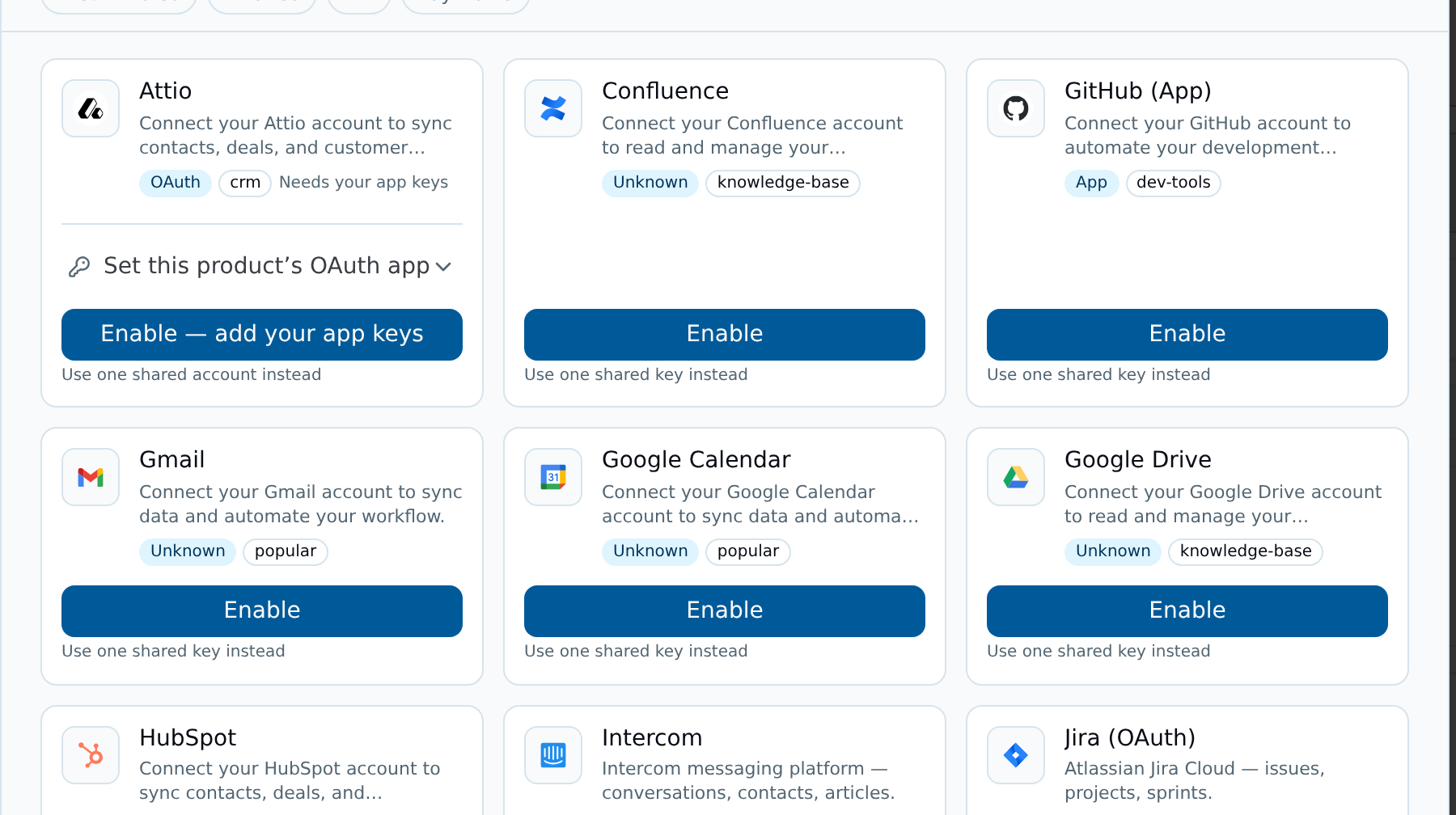
Someone says “just connect to the API”. Easy if you’re technical. A wall if you’re not. A product that can’t connect to your systems is a glorified tech demo. If SaaS Factory, you point at what your product needs to talk to, and the agents build it.
WHY IT MATTERS
Tell us what to connect to. Your CRM, your accounts software, your AI. Every connection comes with the supplier’s full instructions built in, so the spec and the agents know exactly how to build it. Then it’s checked against those instructions, so it doesn’t quietly break later. One of the biggest technical frictions, gone..
PRODUCT SUITES
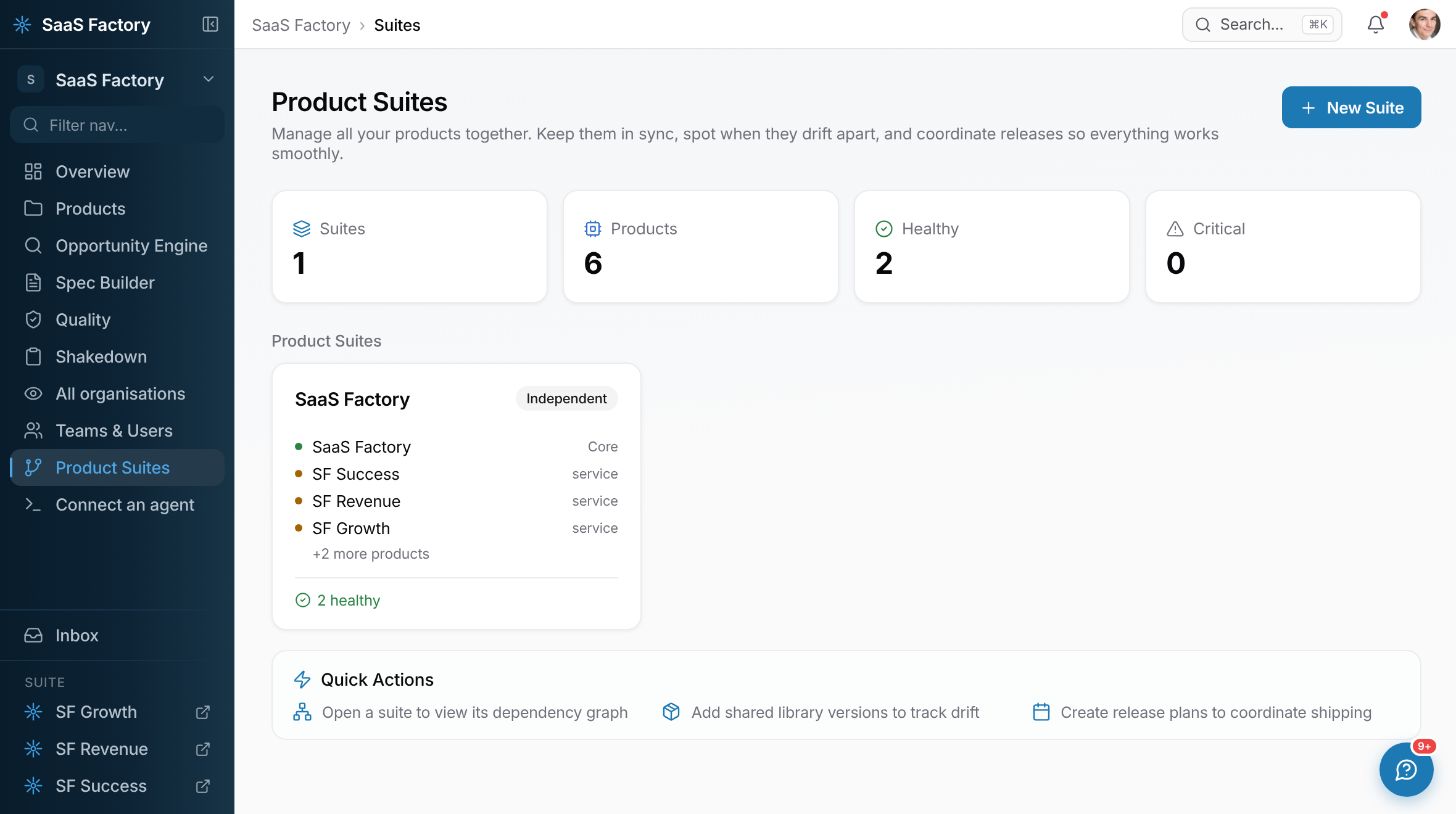
Build a suite, not a monster app. A suite is a circle of focused products that all talk to each other. Each one stays simple. Together they’re rich. We run SaaS Factory this way: The SaaS Factory Suite; SF core build product, tech stack and business stack. SF Growth is website, launch and leads. SF Success for support, tickets and feedback shipped the same day. SF Revenue manages billing, subscriptions and getting paid. Four separate products all connected. One suite.
In production
Landlord Making Tax Digital is live on SaaS Factory, built for UK landlords. It runs four connections: agentOS Landlords, HMRC Making Tax Digital & TrueLayer. Hundreds of calls a day. Real traffic, real customers. Check out Landlord-mtd.co.uk. Hyper connected. Out of the box. Ready for your customers on day one.
Not in the store
The store is a head start, not a boundary. An API that is not listed — a niche vendor, a legacy system, something built in-house — can be added as a custom connection, so a missing logo never becomes a missing feature.
YOUR ACCOUNTS
Connect once. For your whole product or let each customer connect their own. We handle the sign in and keep it secure.
Connect once and everything uses it.
Each customer connects their own. Nothing shared.
Logins, permissions and staying connected, all done for you.
